978-270-0755

Phyco2
Phyco2

978-270-0755

Growing algae for a greener tomorrow

Growing algae for a greener tomorrowGrowing algae for a greener tomorrowGrowing algae for a greener tomorrow

 Reduce 1 giga-tonne of CO2 annually by 2050 with algae photo bioreactors 

A leader in today’s industry

PHYCO2 was formed to focus on capturing CO2 from power plants but noticed an opportunity to reduce carbon emissions and produce a valuable product by converting CO2 into algae. 


PHYCO2 began to harness the natural power of algae more productively by designing a proprietary enclosed photo bioreactor (RPB) to produce high quality algae faster, cleaner, and more consistently. 


PHYCO2 designed this innovative system with a different set of guidelines. Our goal is  to achieve a scalable, continuous production and operation all  independent of location, sunlight, and space. The original RPB is  designed under patents (US Patent #8,476,067 B2, Canada Patent  #2,712,862), but PHYCO2 has created the next generation of systems even  more effective and efficient (Patent pending) 


  • 2nd gen. algae growth for commercial production.
  • 6-year development at MSU (Michigan State University).
  • Proprietary controlled growing environment.
  • Established partnership with Pacific Agritec for commercial market. 


Company History

Our Mission

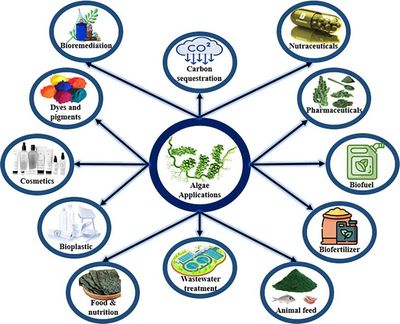
Develop scalable, cost-effective algae photo bioreactors (PBR) to reduce  CO2 and produce algae to deliver nutrition for humans, animals, and  fish; organic sources for cosmetics, pharmaceuticals; carbon  sequestration; water purification; and organic nutrients for crops. 

2008 – PHYCO2  LLC was formed by Greg Hagopian, Managing Member, and Robert (Bob)  Morgan, Secretary, as a Delaware LLC.  The company’s purpose was to  sequester CO2 from power plants through a photosynthetic process with  algae. Bob Morgan designed the first helical coil reactor.

2010 – Patent applications were filed in the US and Canada.  The company  tested a small-scale reactor at Utah State University which showed the  potential of the design to grow algae and reduce CO2.  A Cooperative  Research Agreement was signed with Michigan State University to test the  PHYCO2 designed reactors and its performance with various algae  strains.

2014 – The company raised capital to fund  the construction of two prototype reactors and run an 18-month series of  tests at Michigan State University (MSU).

2015 –  The prototypes were built and installed at the MSU T.B. Simon Power  Plant where they received a slip stream of flue gas from a natural gas  and coal fueled boilers.  Testing of the reactors and their sub-components began in November 2015.

2016 – Testing  of the prototypes was completed in late October 2016.  The reactor  set-up was modified to increase the light intensity on the algae which  resulted in much higher algae production and CO2 sequestration rates.   The design of scalable reactors for large algae production plants was  started with 3D modeling of the reactors and CFD analysis of the fluid  circulation in the reactor designs.

2017 – We  received a 3-year DOE grant with Michigan State University received DOE  grant for new CO2 sequestration project from fossil fueled power plants.  PHYCO2 provided reactors to grow algae as a chemical feed-stock for  process.

2018 – MSU project started, helical coil reactor in service starting January 2018. New design entered service on June 2018.

2019 – New scalable PBR tested and quickly grew algae.

2020 – Original PBR design operated continuously for 33 months as part of the DOE project.

2021 – Final DOE report completed with technical paper from Ph.D. thesis was  published by Elsevier. Joint venture formed with ABI Energy, LLC to  pursue commercializing the PHYCO2 Technology to reduce CO2 emissions  from industrial combustion operations in the oil field, power plants,  and process heat markets.

2023 – PHYCO2 equipment installed on an oil lease in California as part of a validation project. Patents filed. 

Lab Results

2010 Utah State University

2015 / 2016 Michigan State University

2015 / 2016 Michigan State University

  • Tests – Self Funded
  • Stable algae growth
  • CO2 absorption estimates ±35%

2015 / 2016 Michigan State University

2015 / 2016 Michigan State University

2015 / 2016 Michigan State University

  • Test – Self Funded
  • Sustained production – 5+ months
  • Stable algal production rates
  • CO2 absorption from boiler flue gas
  • Energy balance estimates
  • Algae production cost estimates
  • Water consumption estimates

2017 / 2020 Michigan State University

2017 / 2020 Michigan State University

2017 / 2020 Michigan State University

  • DOE Funded
  • Started January 2018 with helical coil reactor
  • 33 consecutive months of sustained operation completed
  • New scalable design built and tested for 3 months
  • Testing completed in September 2020
  • Final report issued in 2021

2021 - 2025 Present Joint Venture

2017 / 2020 Michigan State University

2017 / 2020 Michigan State University

  • Formed Pacific AgriTec, LLC
  • Validation testing in California
  • Patents filed

In the News

  • October 16, 2018 – PHYCO2 algae pilot program with MSU reaches new milestones. 
  • 2018 – PHYCO2, MSU advance algae production/carbo reduction program.
  • December 1, 2017 – MSU gets grant for power plant emission reduction, algae growth.
  • October 3, 2017 – PHYCO2, MSU research to harness algae to contain power plant emissions.
  • June 19, 2017 – PHYCO2, MSU publish in algal research. 
  • February 13, 2017 – PHYCO2, MSU make wastewater reusable through pure algae growth.
  • April 20, 2016 – In the dark: Algae growth without sunlight could boost energy production. 
  • March 20, 2016 – PHYCO2, MSU breakthrough grows algae 24/7 without sunlight.
  • September 14, 2015 – MSU/PHYCO2 collaboration works for cleaner power.

Company Leadership

Executive Committee

Gregory A. Hagopian, Managing Director 

  • US Army Field medic. 4th Infantry Division 1967 – 1969
  • Sales Executive of Harrinton Industrial Plastics 1973-1977
  • Account Executive of J. Daniel Bell and Company 1977-1982
  • Vice President of Insulated Shipping Containers, Inc 1982 – 1987
  • Independent Consultant helping large corporations 1987-1994
  • Vice President of Operations of Fuel Technologies Inc, 1994 – 2002
  • President/CEO of Fuel Technologies International 2002 – Present

 Bruce Tatarian, Secretary 

  • Chemistry degree from California State University, Fresno
  • JD Degree from Western State University College of Law
  • MBA from California State University, Long Beach
  • Vice President of worldwide commercial operations at Beckman Instruments for 20 years
  • Senior Advisor of HµREL Corporation, Present

 William B. Clary, Treasurer 

  • BA Chemistry, Carleton College, MN
  • MS Mechanical Engineering, University of MN
  • Founder of MIRATECH Group, LLC 1992 – 2014
  • Founder and Investor of PHYCO2 LLC
  • Over 28 years of business management, development, sales, marketing, and technology development. 

Advisory Board

 Mr. Regis Dahl 

 Mr. Lee-Volker Cox 

  • US Air force Colonel. 14th Air Force Director of Operations.
  • Senior US Representative in Greenland.
  • International Photographer featured in galleries and published array. 
  • University assistant professor.
  • Launch team member for NASA’s satellite validating Einstein’s Theory of Relativity.
  • Recognized as the US Air Force’s best public affairs officer.

Frequently Asked Questions

Add an answer to this item.


Add an answer to this item.


Algae is made up of cellulose, hemicellulose, and pectin that grow in water by absorbing CO2 and releasing oxygen as a byproduct. 


Globally, the uses for algae include food, food supplements, nutraceuticals, pharmaceuticals, bio-stimulants, bio-insecticides/pesticides, bio-fuels, bio-polymers, and other chemical feed-stock applications 


Add an answer to this item.


1.8 lb of CO2 will be captured to create 1 lb of Algae


The markets current solution to use large open ponds leads to limited daylight hours, contaminated /evaporated water, land consumption, temperature and weather... spoiling the production and efficiency of algae growth. 


Add an answer to this item.


Yes, A fully contained photo bioreactor produces high quality algae free of any contamination therefore making it ideal for human consumption. Bad quality algae can come from large open ponds that become contaminated from the wildlife and other air particles.


The global market for algae sales is large and growing with an estimated  compound annual growth rate (CAGR) of 7.2% and a market size of 804M. In Japan, China, US and Europe the market is established for algae-based  products for food and nutritional supplements. 


Contact Us

Contact Us

Find our more

If you are interested in learning more about us or our mission, click the button below or call to get in touch. We'd love to hear from you. 

Bill Clary

978-270-0755

Got a Question?

Attach Files
Attachments (0)

This site is protected by reCAPTCHA and the Google Privacy Policy and Terms of Service apply.

Copyright © 2026 Phyco2 - All Rights Reserved.

Powered by

This website uses cookies.

We use cookies to analyze website traffic and optimize your website experience. By accepting our use of cookies, your data will be aggregated with all other user data.

Accept